

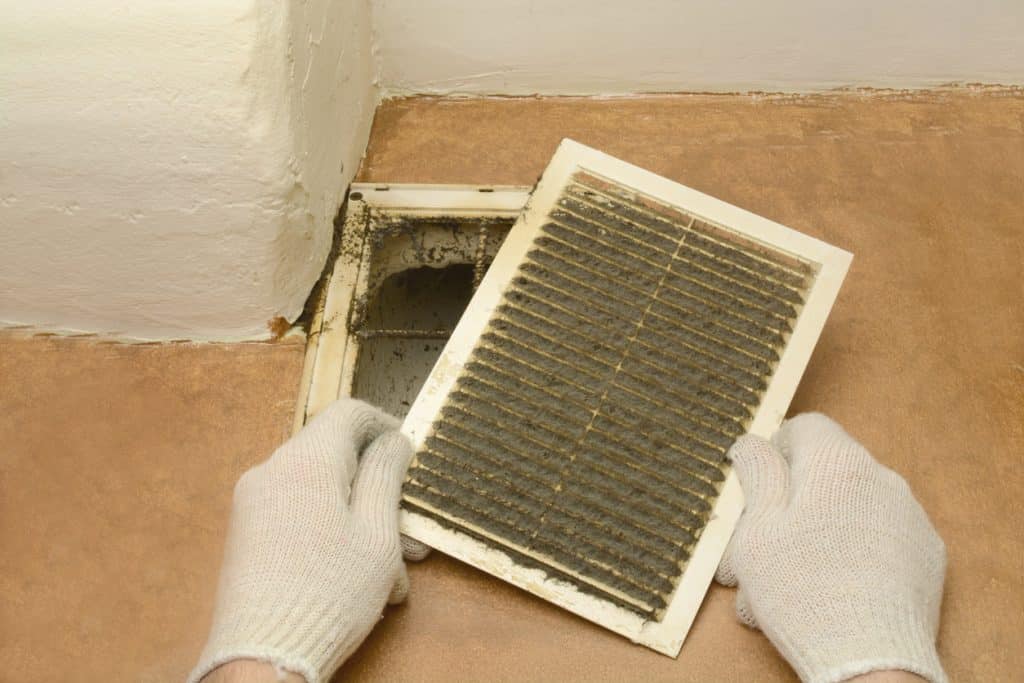
As a home ages, its indoor air quality tends to decrease. This is the result of materials breaking down, HVAC equipment wearing out, moisture infiltrating, and pollutants accumulating. Find out more about indoor air quality problems in older homes and how to address them.
Building Material Breakdown
While building materials should last for decades, they will eventually degrade. This wear can occur quickly when moisture is present. Problems with building materials that impact indoor air quality can include crumbling plaster, aging carpets, padding breaking down, and paint flaking. In some scenarios, the dust and fiber you’re encountering may be dangerous. Older homes may contain lead paint, or asbestos may be a concern.
Gaps and Cracks
As a home ages, it settles. Window seals can weaken along with door frames and foundations. Very small cracks and gaps can form, allowing outdoor pollutants to enter the home. This includes pollen, pollution, moisture, and even pests. We can identify leakage points and recommend the right sealing approach. However, this is a substantial problem in older homes. If gaps are widespread, getting our professional assessment may be the next step.
Dust and Particulate Accumulation
Even with regular cleaning and maintenance, dust and particulate matter can accumulate in areas such as wall cavities, under flooring, and inside ductwork. It can be difficult to access these particulates for removal unless you’re doing renovations. However, particulate matter may circulate when your HVAC system runs, or when foot traffic stirs up contaminants hiding in your carpets or rugs.
Old Ventilation and HVAC Systems
Heating and cooling equipment can last anywhere from 15 to 20 years. However, older homes may have equipment in place that’s even older than that. Filtration may not be adequate. Ductwork may not be sufficient, resulting in inadequate circulation and ventilation. Your old home may lack exhaust fans in areas like the bathroom and kitchen. Without removing stale and humid air, you may be increasing the amount of particulate matter in the air.
High Humidity
Older homes often have high relative humidity due to gaps and cracks, inadequate ventilation, and aging roofs. Humid air can more easily hold onto particulate matter, negatively impacting your indoor air quality. We can evaluate humidity-control options, including dehumidification, for your home. A whole-home humidifier can address the root cause of the problem to control moisture, keeping it within the often-recommended range of 35% to 50%.
Don’t let your older home degrade the quality of your indoor air. Contact us at Priority Plumbing and Heating in Denver, CO to learn more about our indoor air quality services.