

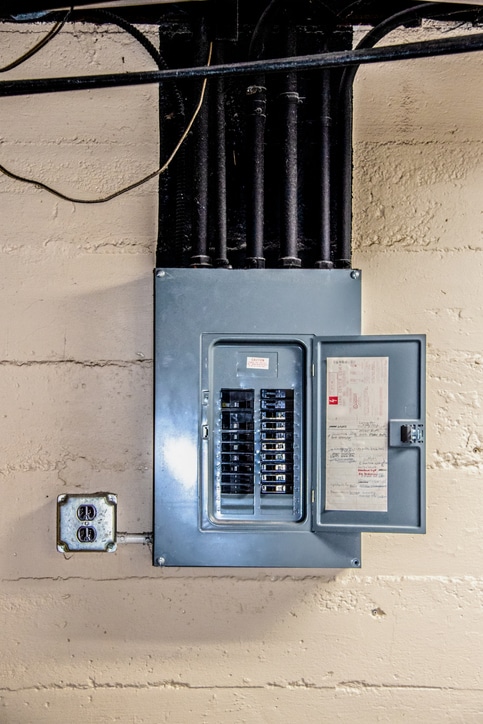
An electrical panel is the center of your home’s power supply, and where it’s located matters more than you might realize. Basements and garages present a unique set of challenges that typically don’t apply to panels installed in more controlled indoor environments.
Temperature swings, moisture and clutter can interact with electrical equipment in ways that can create dangerous conditions. Knowing what to look for and how to respond makes a real difference.
Moisture Levels
Basements are prone to humidity and water intrusion. An electrical panel that’s regularly repeatedly exposed to moisture can develop corrosion on breakers that compromises function and safety. If your basement panel is on an exterior wall, periodically check for any signs of water staining, rust or condensation. Using a dehumidifier can help manage moisture levels between professional inspections.
Clearance Around the Panel
There should be at least 3 feet of clear space in front of your electrical panel at all times. In basements and garages where storage can accumulate fast, this rule is often ignored. Boxes, lawn equipment and seasonal items stacked in front of or directly beside a panel create a fire hazard and a barrier to emergency access.
Garages Introduce Their Own Set of Risks
Garages bring about a different combination of hazards. Flammable materials like gasoline, solvents or propane are usually stored in garages. In addition, exhaust fumes from your car and airborne dust from woodworking or other hobbies can negatively affect the panel as well. If your garage panel doesn’t have a proper cover, that’s something a licensed electrician should evaluate and address.
Know the Warning Signs of a Panel That Needs Attention
Breakers that repeatedly trip or a burning smell near the panel with visible scorch marks around any of the breakers should be investigated immediately. An electrician can determine whether the issue is an isolated breaker, a wiring problem or a sign that the panel has reached the end of its service life.
Never Treat the Panel as a DIY Project
Opening an electrical panel exposes live components that remain active even when individual breakers are turned off. Labeling breakers, resetting a tripped breaker or visually inspecting the exterior of the enclosure are things you can do. However, anything more belongs in the hands of a licensed electrician.
Electrical panels located in basements and garages demand more attention than those in climate-controlled interior spaces. Maintaining proper moisture levels and keeping the area around the panel clear can reduce the risk of fire significantly. If in doubt, always contact a licensed electrician for help. If you live in Denver, CO or a surrounding area and need electrical panel services, make your first call to Priority Plumbing and Heating.